Michael KB
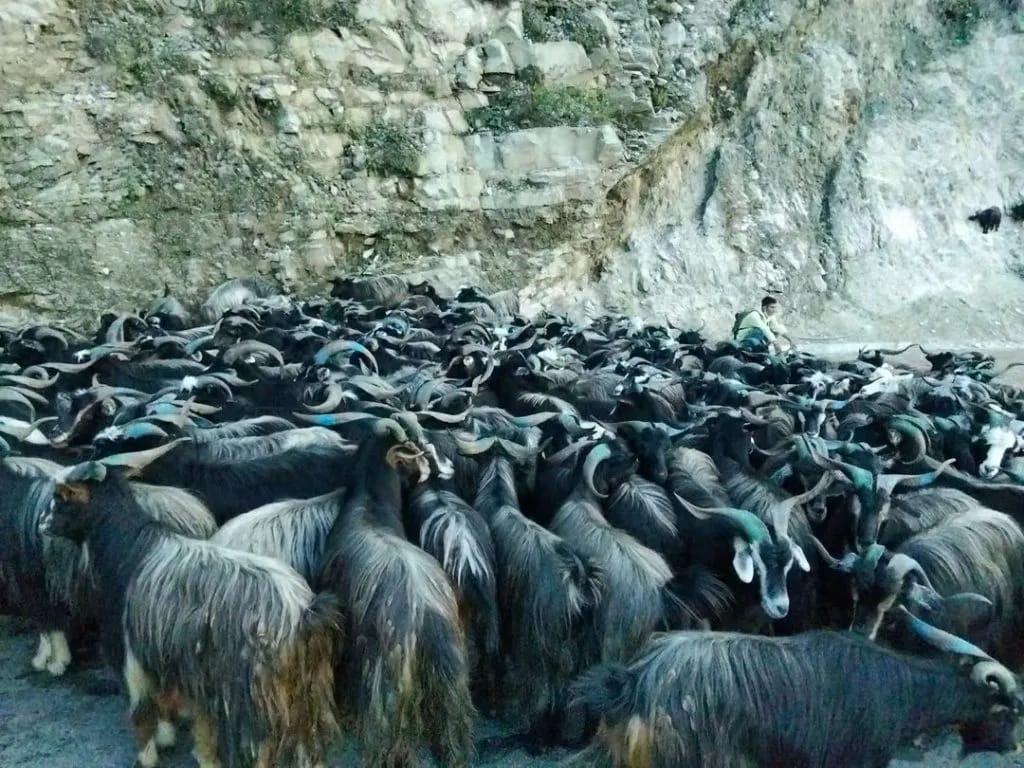
Pokhara, Nepal: A total of 14,800 sheep and mountain goats have arrived in Pokhara ahead of the Dashain festival, with sales underway at designated livestock markets in Simpani and Hemja.
Traders have brought the animals from Mustang, Darchula, Bajhang, Bajura, and Dolpa to meet the increased demand for livestock during the festive season. The livestock markets are operating in Pokhara Metropolitan City–1, Simpani, and Ward No. 25, Hemja.
According to Nawaraj Adhikari, a veterinary doctor at the metropolitan city's Animal Service Branch, 9,000 animals have arrived from Mustang, 2,000 from Darchula, 1,800 from Bajhang, and 1,000 each from Bajura and Dolpa. More animals are expected to reach the markets one or two days before Phulpati, as some shipments are still on their way.
Local sheep from other districts of Gandaki Province are also being brought to Pokhara for sale. While some traders have already brought their livestock to the designated markets, others have kept their animals in grazing areas around the city.
Mountain Goats Selling for Up to Rs. 1,250 per Kilogram
According to the metropolitan city's Animal Service Branch, mountain goats are selling for up to Rs. 1,250 per kilogram, while sheep are priced at around Rs. 700 per kilogram in Pokhara's livestock markets.
Mountain goats raised in the cold Himalayan climate are particularly popular during Dashain, with strong demand in Pokhara and surrounding areas. Goats and other livestock are also transported to Pokhara from districts including Surkhet, Arghakhanchi, Dang, Palpa, and Tanahun.
Authorities Intensify Livestock Health Inspections
With a large number of animals entering Pokhara for the festival, concerned authorities have begun monitoring their health and checking for potential disease risks.
A joint team comprising the metropolitan city's Animal Service Branch, the Veterinary Hospital and Livestock Services Office in Kaski, and the Animal Quarantine Office in Pokhara has started inspecting the animals and monitoring their sale and distribution.
Most of the animals inspected so far have been found to be healthy, according to the authorities. The monitoring process will continue until Phulpati.
Traders are required to obtain health certificates from the livestock service offices in the respective districts before transporting the animals. If any sick animals are identified during inspections, they are to be isolated from the others.
Dr. Grishma Neupane, chief of the Veterinary Hospital and Livestock Services Office in Kaski, said inspections were necessary because of the large number of animals entering the market during the festive season and the associated risk of disease transmission.
He advised consumers to check the health of animals before purchasing them. Healthy animals should have normal breathing, no excessive salivation, and a smooth, glossy coat.
He also recommended bringing animals home at least 24 hours before slaughter to allow them to rest after long journeys on foot or by vehicle.
Traders Report Transportation Difficulties and Weak Market Conditions
Nawaraj Devkota, a trader from Mugu, said he had transported mountain goats from Humla to Pokhara on an 11-day journey. The animals were moved partly on foot and partly by vehicle.
According to Devkota, continuous rainfall and landslides made transportation more difficult this year than in previous years.
“This time, sometimes the rain caused problems, and at other times, floods created difficulties. The market used to be good, but now the market is not doing well either,” he said.
Devkota added that transportation costs, fees payable to local governments and livestock service offices along the route, and expenses associated with grazing areas contribute to the rising cost of mountain goats.
As Dashain approaches, livestock trading in Pokhara is expected to increase further. Consumers are advised to consider not only prices but also the animals' health conditions and relevant health certificates when making purchases.